HEAVY CONSTRUCTION
Climate intelligence in heavy construction: climate risk isn't force majeure. It's every idle day turning into a penalty
Your construction company already manages the physical-financial schedule, health and safety, productivity and compliance, each front with a team, indicator and audit. Climate risk, the one that most delays delivery, triggers penalties and blows up time extension claims, is still treated as force majeure. Not as a management variable.
Bridges, ports and highways: weather goes into the schedule, not into the time extension claim.







Climate risk is the biggest unaccounted cost of a construction project
R$ 1.1 billion
in Engineering Risks insurance premiums in 2024, 12.2% above 2023. The coverage includes weather perils, and the industry itself links this increase to the higher incidence of climate catastrophes after Rio Grande do Sul. The project's climate risk is already being priced, even when the builder treats it as force majeure.
0.5%
of infrastructure megaprojects deliver on schedule, budget and scope at the same time. Only 8.5% deliver on schedule and budget together. When the schedule blows up, the contract collects and the margin disappears.
R$ 7 billion
is the infrastructure share of the R$ 88.9 billion the Rio Grande do Sul floods cost in 2024. A single event, a single state. The next bid has to price this scenario in, not hide it under "miscellaneous".
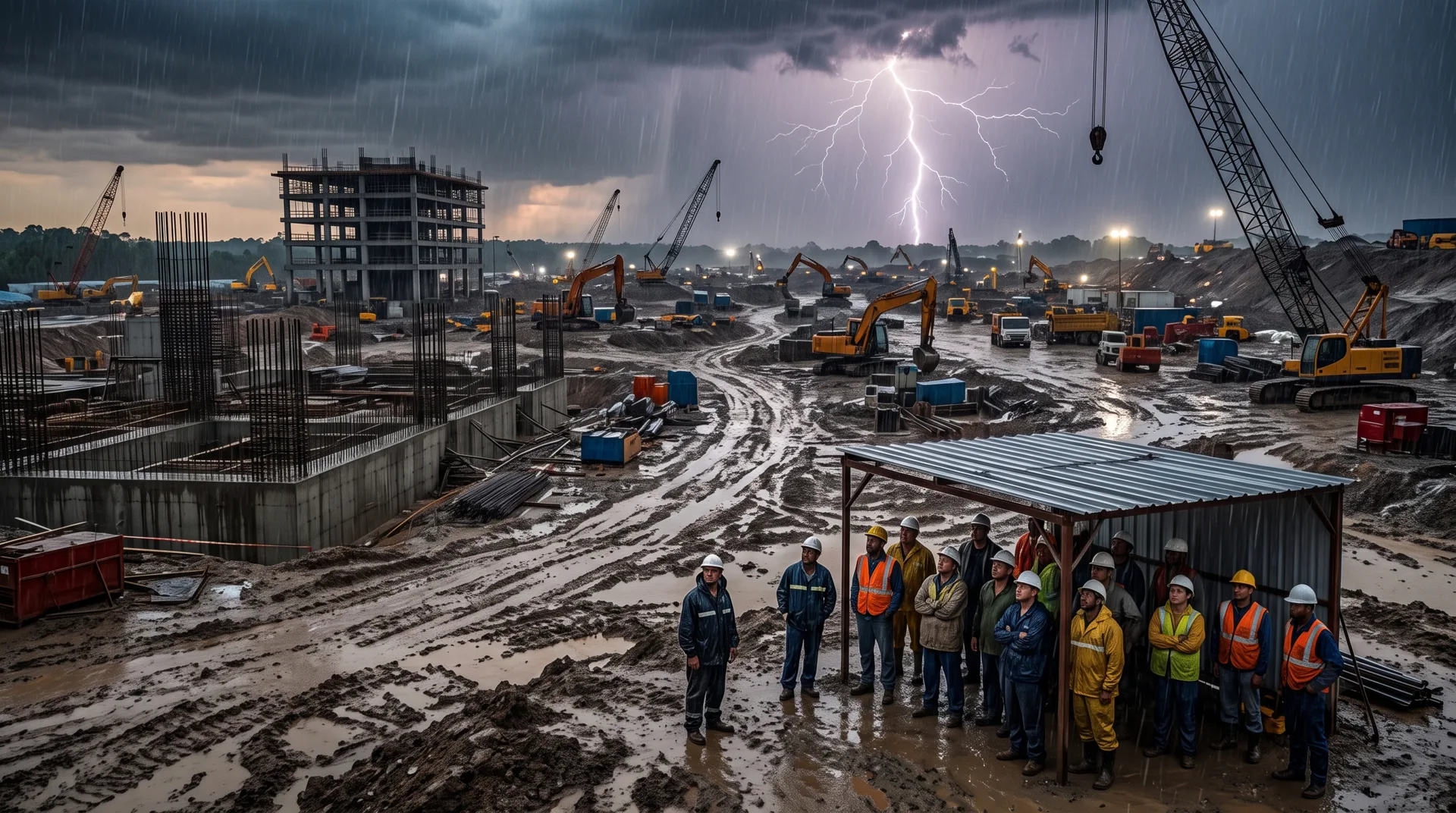
Torrential rain on the earthworks, lightning on the site, wind during crane lifts, swell on the coastal works. On every front, the schedule slips and the penalty grows.
Climate intelligence inside the schedule, not in the time extension claim
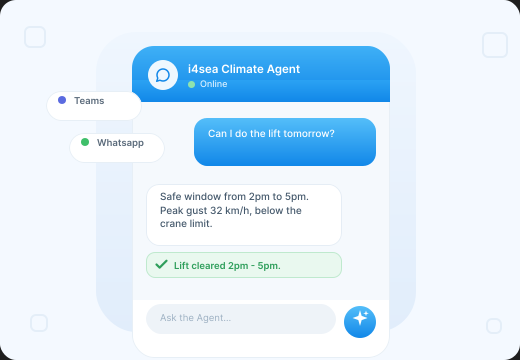
A conversation in the channel your team already uses
The AI Climate Agent lives in WhatsApp, Teams and a ChatGPT-style chat. Your team asks "what's the safe window for concrete pours in the next 72 hours?", "does the wind allow lifting tomorrow at 2 PM?", "will rain stop the earthworks next week?". The Agent replies with the window, the recommendation and who needs to be notified. And when a risk appears, the Agent arrives first, without anyone having to ask. It doesn't replace your contingency plan. It goes inside it.
- Teams
- Chat
- Natural language
- Proactivity
Recommendations per critical front, before the event
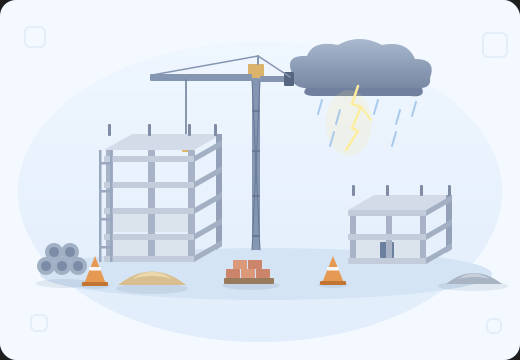
Lifting, concrete pours, earthworks, foundations, coastal works. Each front receives recommendations on climate hazards before the event. It's not "wind in the metro area". It's "crane tower 4, wind above the operating limit between 2 PM and 5 PM, suspend lifting and lock the boom 90 minutes ahead". Your team receives it on Teams, WhatsApp and email.
- Per front
- Lifting
- Concrete pours
- Earthworks
- Actionable recommendation
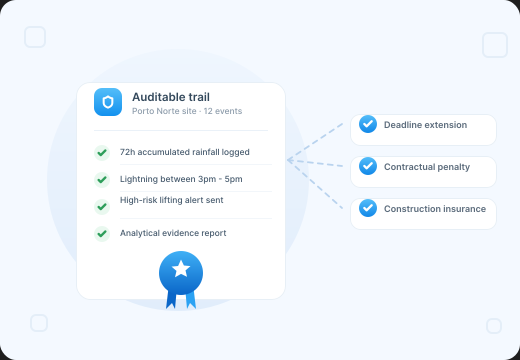
An auditable trail for time extensions, penalties and insurance
Every alert and recommendation is logged with time, data source and owner. When rain actually delayed the works, the Director has documentation ready to support a time extension claim, contest a contract penalty and trigger the insurance. Leave generic force majeure behind and move to here is the evidence.
- Auditable trail
- Time extension
- Contract penalty
- Insurance
Get a climate exposure assessment before the next impact
Want to see how it would look on your site?
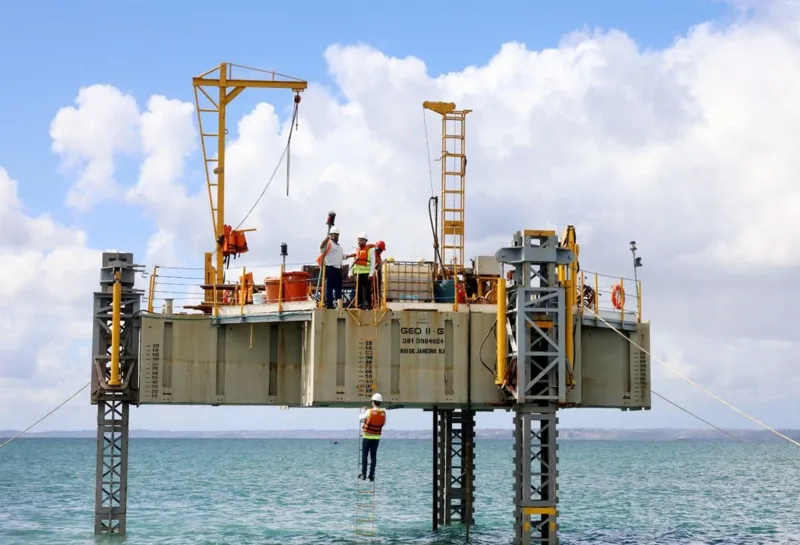
CCCC · Salvador-Itaparica Bridge project
The result when the decision comes before the event
+72 hours
of lead time on the project's critical events
With hyperlocal recommendations per front (mobilization and crane use), the engineer now operates with days of lead time, capturing more safe windows, avoiding accidents, optimizing mobilization and building evidence for contractual time extension discussions.
Climate intelligence for heavy construction: frequently asked questions
Get a climate exposure assessment before the next impact
You can't control the weather, but you must manage the risks
It is the use of hyperlocal forecasting (1 to 3 km) and a Climate Agent to turn rain, lightning, wind and extreme heat into decisions per work front: safe concrete pour windows, suspended lifting, rescheduled earthworks. Unlike a city forecast, climate intelligence for heavy construction goes into the physical-financial schedule, warns before the event on WhatsApp and Teams, and logs every alert in an auditable trail for time extensions, contract penalties and insurance.
The ones that stop work most often in Brazil are intense and accumulated rain that saturates the soil (earthworks, foundations and slopes), wind and gusts above the boom limit (lifting and cranes), lightning (safety and work at height), extreme heat and humidity (productivity and concrete curing) and, on coastal works, swell, storm surge and tide. Each one affects a different front, so the risk needs to be read per front, not from a "city forecast".
The impact shows up in three places: schedule (idle days that push delivery and trigger contract penalties), direct cost (idle crews, mobilized equipment and damaged material) and contractual risk (time extension claims and disputes). The market already prices this in: Engineering Risks insurance, which covers weather perils, grew 12.2% in 2024, reaching R$ 1.1 billion in premiums. Reading the risk per front and ahead of time is what turns this cost into a scheduling decision.
Each critical front (lifting, concrete pours, earthworks, foundations, coastal works) is registered as a monitored asset, with coordinates, geometry and operational limits (maximum boom wind, minimum curing window, rainfall accumulation that saturates the soil). The Agent doesn't answer by municipality. It answers by crane tower, work area and pile. The decision arrives at the level where it's actually made.
It depends on the phenomenon and what it affects:
- Imminent lightning: minutes up to 6 hours
- Wind, gusts and heavy rain: hours to 2 days
- Accumulated rainfall, soil saturation and concrete-pour windows: 1 to 3 days
- Cold fronts, extratropical cyclones and storm surge: 3 to 10 days
Each front gets the lead time it needs to act, not whatever is left over from the bulletin.
The Agent lives in WhatsApp, Teams and a ChatGPT-style chat. The engineer asks "can I lift beam V-12 tomorrow at 2 PM?" and receives the window, the recommendation and who needs to be notified. And when a risk appears, the Agent arrives first, without anyone having to ask. It's proactive initiative in the channel the team already opens every day, not one more portal to log into.
Two ways: integration with the construction management system the client already uses (via technical channels configured during onboarding), or through the human channel, with the Agent talking to planning and contracts on Teams and WhatsApp. Every weather delay is logged and linked to the corresponding front, with time, data source and owner. At the end of the month, the schedule knows exactly what the weather took from it.
Every alert and recommendation is logged with time, data source and owner. When rain actually delayed the works, the Director opens the trail and has in hand the forecast event, the observed event, the recommendation sent, who decided what and when. Documentation ready to support a time extension claim, contest a contract penalty and trigger the project's insurance policy, with nothing to reconstruct afterwards.
Each type of project has its own risks, and the Agent is calibrated for each one. Coastal and port works: boom wind, waves and tide for marine operations, storm surge for rock armoring and rain that stops work at the quay. Tunnels: heavy rain and basin saturation that trigger risk at the portal, seepage and slope instability at the entrance. The same Agent, with different rules, because each project's risk is different too.
2 weeks, in 3 stages:
1. Registration of the project's critical fronts (lifts, concrete pours, earthworks, foundations, coastal fronts) with coordinates and operational limits
2. Calibration with the site's history and business decisions (penalty per idle day, measurement milestones, force majeure hypotheses)
3. Configuration of channels (WhatsApp, Teams, email), alert levels and notification protocols
It involves planning, health and safety, and legal/contracts. It gets off the ground fast, because the next heavy rain won't wait for onboarding to finish.
Four differences that matter on site:
- Resolution: public forecasts operate at a scale of tens of kilometers and can't tell what happens between km 35 and km 60. i4sea delivers 1 to 3 km per front.
- Language: a generic rain bulletin versus an actionable recommendation per lift, concrete pour or earthworks front.
- Initiative: with traditional forecasts, the team checks when they remember. Here, the Agent warns first, without anyone having to ask.
- Auditable trail: a bulletin doesn't become evidence for a time extension claim. Every i4sea alert does.
A bulletin reports the weather. The Agent protects the schedule.
On a large project, the contract penalty per idle day typically runs into hundreds of thousands of reais, before counting the cost of idle crews, mobilized equipment and the time extension negotiated afterwards. The Agent costs a fraction of that. It pays for itself on the first anticipated event, and from then on everything it avoids is margin going back into the project.