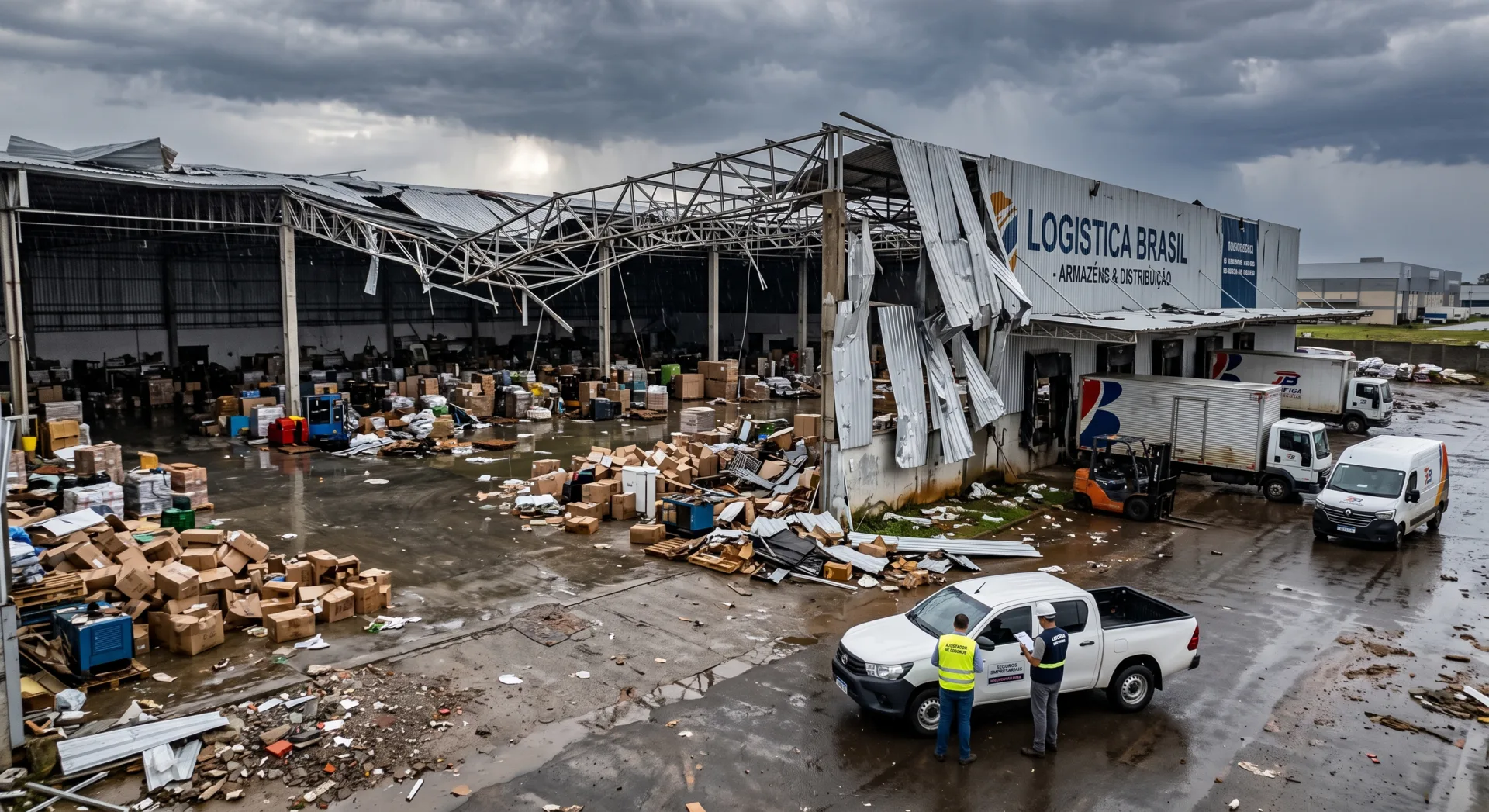
INSURANCE · CLIMATE RISK PER ASSET
Climate intelligence for insurers: your loss ratio is being priced with a climate that no longer exists
Every insurer today has a robust actuarial team, a contracted catastrophe model, a structured reinsurance program and an underwriting committee, each with a key person, indicator and audit. Physical climate risk, calibrated asset by asset and with IPCC scenarios, is the variable that most unbalances premium, claims and reserves. Even so, it's still treated as the generic tail of the catastrophe model, not as a pricing input.
Physical risk per asset for underwriting. Event-level anticipation for claims and portfolio. Defensible evidence for subrogation and reserves.







Climate risk isn't in the sustainability report. It's in the loss ratio
US$ 137 billion
in global insured losses from natural catastrophes in 2024, 27% above the 10-year average (US$ 108 billion).
US$ 181 billion
global protection gap in 2024: 57% of economic losses from disasters (US$ 318 billion in total) went uncovered.
8 out of 700
listed companies had voluntarily adopted climate risk disclosure (IFRS S1/S2) by Dec/2025. Since CVM Resolution 244 (May/2026), reporting is voluntary, not mandatory.
Hurricane, severe convective storm, urban flooding, lightning on an insured asset. In every case, the event hit before the decision and went straight into the loss ratio, the technical reserves and next year's reinsurance program.
Climate intelligence for insurers: price with today's climate and future scenarios. Operate the portfolio before the event
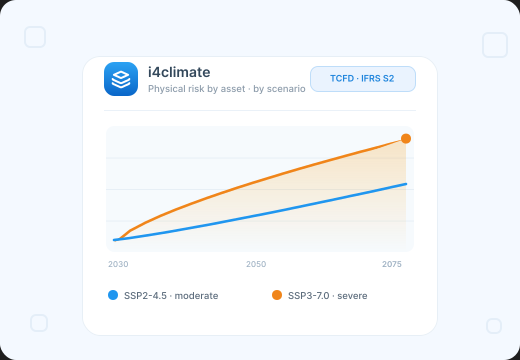
Climate risk for insurers measured per asset, in regulatory-grade format
i4climate delivers climate exposure quantified asset by asset, with IPCC scenarios (SSP2-4.5 and SSP3-7.0) through 2075, natively formatted for IFRS S2, CVM 218 and TCFD. An input for pricing property, agro, engineering, energy and marine lines with a loss ratio calibrated to today's climate and future scenarios, not a 30-year moving average. An output for the regulator, the board, the auditor and the reinsurance program. Out of the catastrophe model's generic tail. Into the pricing input.
- IFRS S2
- CVM 218
- IPCC scenarios through 2075
- Per insured asset
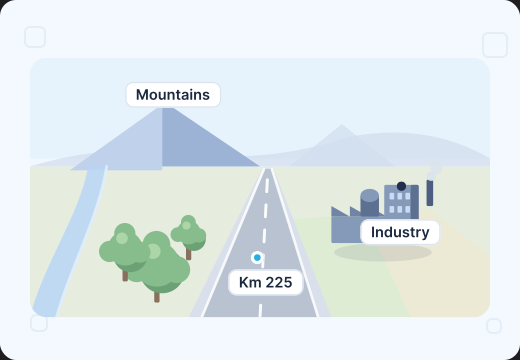
Real-time operational anticipation
The AI Climate Agent knows that a cyclone, cold front, flood or severe storm will hit a region of the portfolio up to 10 days in advance. The insurer gains time to mobilize claims service, notify highly exposed policyholders, activate the claims response plan, align with the broker and reassess aggregate exposure before the event. Not on the day, when the loss has already entered the loss ratio and the claims adjuster has already reached the policyholder.
- Event-level anticipation
- Portfolio
- Claims service
- Teams
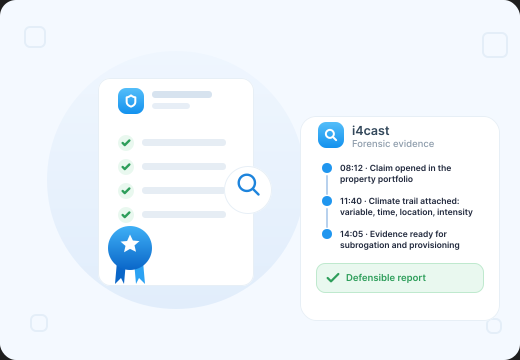
Forensic evidence for claims, subrogation and reserves
For every climate claim, a trail of what happened: observed variable (rain, wind, lightning, waves, tide, hail), time, location, intensity and data source. It supports cause analysis, subrogation against third parties, proof of force majeure, technical reserve adjustments, contract clause reviews and defense in litigation. Leave the one-off technical report behind and move to defensible climate evidence, ready for the claims, legal and actuarial teams.
- Auditable trail
- Subrogation
- Technical reserves
- Force majeure
Get a climate exposure assessment before the next impact
Want to see how it would look across your portfolio?
Climate intelligence for insurers: frequently asked questions
Get a climate exposure assessment before the next impact
You can't control the weather, but you must manage the risks
It is the use of calibrated climate data, asset by asset, to make underwriting, claims, reserving and reinsurance decisions. It covers acute physical risk (storms, floods, hail, cyclones, lightning) and chronic physical risk (gradual shifts in temperature, rainfall and sea level), with IPCC scenarios through 2075. In practice, climate intelligence for insurers works on three fronts: pricing calibrated to today's climate, event anticipation across the portfolio, and defensible evidence for subrogation and technical reserves. In Brazil, SUSEP Circular 666/2022 requires insurers to integrate sustainability risks, including climate risks, into their risk management. At i4sea, this is delivered by i4climate and the Climate Agent.
i4climate registers each insured asset (plant, terminal, wind farm, farm, fleet, route) with coordinates, type of operation and sensitive variables. It crosses that with 10+ years of proprietary reanalysis calibrated for Latin America (3 km resolution) and IPCC projections, scenarios SSP2-4.5 (moderate) and SSP3-7.0 (severe), through 2075. The output is structured around the 4 pillars of IFRS S2 and CVM 218: Governance, Strategy, Risk Management, Metrics and Targets. It's a pricing input, not a sustainability line item.
The AI Climate Agent lives in WhatsApp, Teams and a ChatGPT-style chat. The technical team asks "which policyholders in the property portfolio are in the path of the cold front over the next few days?" and receives a list by exposure, a proactive communication recommendation and who needs to be notified. And when a risk appears, the Agent arrives first, without anyone having to ask. It doesn't replace the reinsurance program. It comes before it.
It depends on the phenomenon and the type of asset in the portfolio:
- Imminent lightning: nowcasting in minutes
- Wind, gusts, heavy rain, hail: hours to 1 day
- Accumulated rainfall, soil saturation, urban flooding: 1 to 3 days
- Cold fronts, extratropical cyclones, storm surge: 3 to 10 days
- Hurricane / tropical cyclone: 5 to 10 days
Each event gets the lead time needed to mobilize claims service, brokers and policyholders, not whatever is left over from the bulletin.
Two ways: (1) via REST API, the i4climate report enters the underwriter's pricing engine as a physical risk layer, feeding loss cost, pure premium and reserves per asset; (2) via human channels (Teams, WhatsApp, email), the actuarial and underwriting teams query exposure per asset, region and scenario directly, in natural language. Physical risk becomes a calibrated variable in the model, not a qualitative committee assumption.
Every alert, observed event and recorded climate variable is stored with time, location, intensity and data source. When a claim is opened, the technical team opens the trail and has in hand what was forecast, what actually happened (accumulated rain, maximum gust, lightning, wave height) and when. Climate documentation ready to support cause analysis, subrogation against third parties (carrier, service provider, counterparty), proof of force majeure under all-risks policies and defense in litigation. Out of the one-off technical report. Into defensible evidence.
Each line has its own hazards, and calibration is per line:
- Property: wind, hail, lightning, urban flooding, storm surge on coastal assets.
- Agro: excessive rain, drought, frost, hail, wind, per plot and crop, with IPCC scenarios for long-term chronic risk.
- Engineering / construction risk: rain on concrete pours, boom wind on lifting, soil saturation, lightning, per work front.
- Marine / cargo: wind, waves, tide, storm surge, visibility, per route stretch and per berth operating window.
The same climate data engine, different rules, because each line's hazards are different too.
A few weeks, in 3 stages:
1. Registration of the insured portfolio (assets, regions, lines, aggregate exposure) with coordinates and the operational limits relevant to each line.
2. Calibration with the insurer's loss history and operational policy clauses (triggers, deductibles, exclusions, per-event limits).
3. Configuration of channels (API, Teams, WhatsApp, email), alert levels, recipients per area (underwriting, claims, actuarial, loss adjustment) and team training.
It involves underwriting, claims, actuarial and technology. It gets off the ground fast, because the next severe season won't wait for onboarding to finish.
They are complementary layers, not substitutes. Traditional catastrophe models deliver a probabilistic aggregate loss curve per scenario, calibrated on long-term historical losses, the foundation of the reinsurance program and of regulatory capital estimates. i4sea delivers what's missing at the edge:
- Physical risk per asset, with IPCC scenarios through 2075 (i4climate), for pricing calibrated to today's climate, not the 30-year average.
- Event-level anticipation, in real time (AI Climate Agent), to operate portfolio, claims and service before the impact.
- 3 km resolution with reanalysis calibrated for Latin America, where global models traditionally have finer coverage in North America and Europe.
The traditional model sizes the tail. i4sea calibrates the pricing and operates the event.
The combined ratio is the sum of the loss ratio (claims paid + reserves / earned premium) and the expense ratio (operating cost + commission / earned premium). Above 100%, the line runs a technical loss. i4sea acts on both sides:
- Lower loss ratio: physical risk calibrated per asset (i4climate) reduces underpricing on highly exposed policies. Event-level anticipation (the Agent) reduces average claim severity: the policyholder is notified beforehand, the asset is protected where possible, the loss is mitigated at the source.
- Lower expenses: automated climate evidence cuts loss adjustment costs, shortens the payment cycle and increases the subrogation recovery rate against responsible third parties.
Every basis point of improvement in the combined ratio in a climate-exposed line is margin going back to regulatory capital and to next year's reinsurance program.