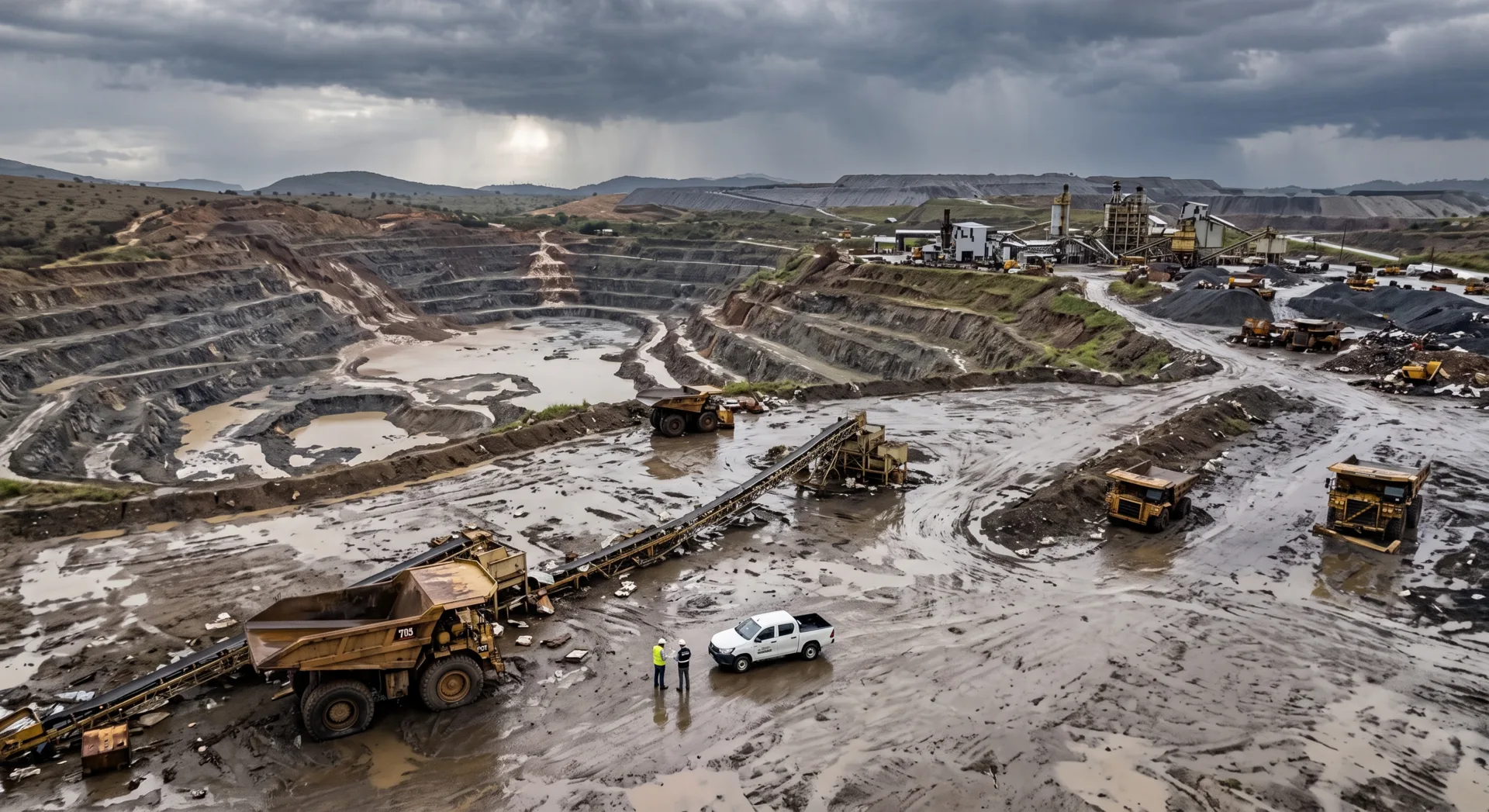
MINING · CLIMATE RISK PER ASSET
Climate intelligence for mining: from the mine to the ship, weather cuts across the entire operation.
Every mining company today has an autonomous mine program, dam management, fleet decarbonization and operational excellence, each with a dedicated team, KPI and business case. Climate risk, which cuts across all of them, was left off the list. And it's still treated as force majeure.
+10,000 actionable alerts per year applied to real decisions







Climate risk is the biggest unaccounted cost in mining operations
30% to 40%
below-average rainfall in 2024 across the Amazon and Pantanal basins, the worst drought on record. At the other extreme of the same year, torrential rains raised the risk at tailings dams.
US$ 2.3 billion
in accumulated demurrage at Brazilian ports in 2024, up 15% from 2023. It's the kind of cost that blows up the budget of an exporting mining operation and ends up filed as force majeure instead of a management variable.
8 of 700
listed companies voluntarily adopted climate risk disclosure (IFRS S2) by Dec/2025. Mining is one of the most physically exposed sectors: reporting risk per asset, with method, is differentiation, not obligation.
Port closures, lightning at the mine, torrential rain in the pit, drought on inland navigation. In each case, the event arrived before the decision.
Climate intelligence for mining: the decision before the pit floods, the lightning strikes and the port closes
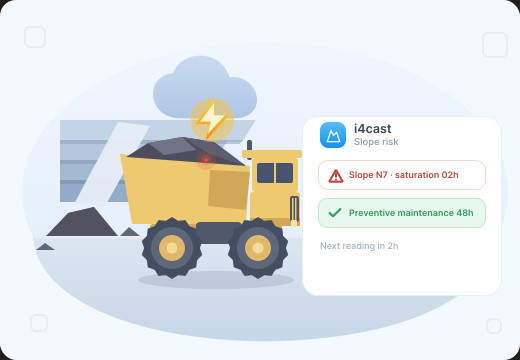
Anticipation in mine operations
Torrential rain in the pit, lightning at the open-pit mine, flooding at the dam. Each critical asset receives recommendations on climate hazards before the event. It's not "rain in Pará". It's "north slope of pit 7, high saturation risk between 2 AM and 6 AM, trigger preventive maintenance 48h ahead". Your team receives it on Teams, WhatsApp and email.
- Per asset
- Actionable recommendation
- Teams
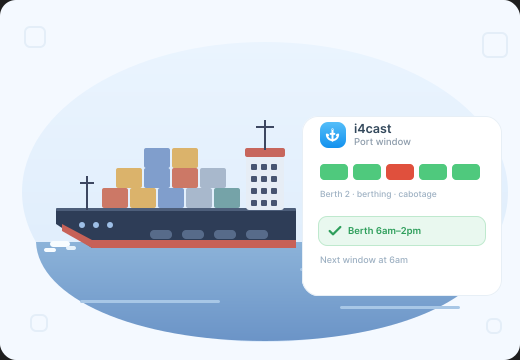
Outbound windows, from the mine to the final port
Each alert translates wind, waves, tide, rain, river level and visibility into loading, berthing and passage windows. The logistics planner sees the disruptions, when to berth and when to redirect.
- Per berth
- Per critical river stretch
- Per operating window
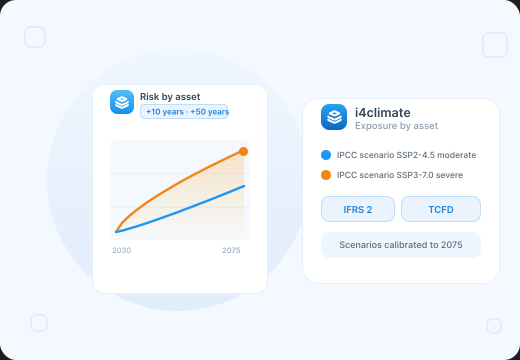
Physical risk measured per asset, in IFRS S2 format
IPCC scenarios (SSP2-4.5 and SSP3-7.0) through 2075, asset by asset. Climate exposure quantified in IFRS S2 format, ready for the board, the auditor and the bank. Out of force majeure. Onto the balance sheet.
- IFRS S2
- IPCC scenarios
- Through 2075
- Per asset
Get a climate exposure assessment before the next impact
Want to see how it would look in your operation?
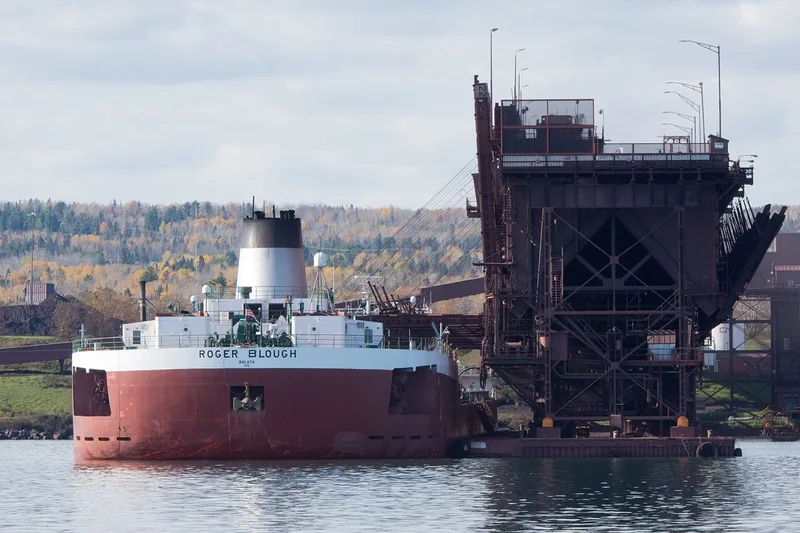
The result when the decision comes before the event
5 to 9%
reduction in demurrage
With hyperlocal recommendations per asset (pit, conveyor, internal railway, berth), the operation began deciding on stoppages, maintenance and loading windows days in advance. The gain showed up in cost: a 5% to 9% reduction in demurrage, capturing more loading windows and building an auditable trail for force majeure discussions with the shipowner.
Climate intelligence for mining: frequently asked questions
Get a climate exposure assessment before the next impact
You can't control the weather, but you must manage the risks
It is the use of hyperlocal forecasting (1 to 3 km), IPCC scenarios and a Climate Agent to turn rain, lightning, wind, waves, tide and water levels into decisions per asset: when to stop the mining front, when to step up dam monitoring, when to berth or reroute the ship. Unlike a regional forecast, climate intelligence for mining covers pit to port, warns before the event on WhatsApp and Teams, and logs every alert in an auditable trail for force majeure, demurrage and IFRS S2 disclosure.
The ones that most affect the operation: torrential rain and flooding in the pit, slope saturation and instability, rainfall accumulation and flow that raise the risk at tailings dams, lightning at the open-pit mine, wind and low visibility at the port, and drought that halts inland shipping. In the long run, shifts in rainfall and temperature patterns change expected frequency and severity. The point is to read each hazard per asset and in advance, not as a "regional forecast".
Each critical asset (pit, slope, tailings dam, crusher, conveyor, internal railway, ore pipeline, port, waterway) is registered for monitoring, with coordinates, geometry and operational limits (rainfall accumulation that saturates a slope, maximum operating wind, loading window by wave and tide). The Agent doesn't answer by mine or municipality. It answers by north slope of pit 7, conveyor C-04 and berth 2. The decision arrives at the level where it's actually made.
It depends on the phenomenon and what it affects:
- Imminent lightning: minutes up to 6 hours
- Wind, gusts and heavy rain, low visibility at the port: hours to 2 days
- Accumulated rainfall, slope saturation and loading windows: 1 to 3 days
- Cold fronts, cyclones, storm surge: 3 to 10 days
- River water levels for waterways (drought): up to 90 days
Each asset gets the lead time it needs to act, not whatever is left over from the bulletin.
The Agent lives in WhatsApp, Teams and a ChatGPT-style chat. The dispatcher asks "can I release the north mining front tomorrow at 6 AM?", "can the Capesize vessel berth at berth 2 in the next 48 hours?" and receives the window, the recommendation and who needs to be notified. And when a risk appears, the Agent arrives first, without anyone having to ask. It's proactive initiative in the channel the team already opens every day, not one more portal to log into.
Two ways: integration with the mine dispatch, maintenance and port management systems (via technical channels configured during onboarding), or through the human channel, with the Agent talking to operations, maintenance and logistics on Teams and WhatsApp. Every stoppage and every window captured is logged and linked to the corresponding asset, with time, data source and owner. At the end of the month, the production plan knows exactly what the weather took and what it delivered.
Every alert, decision and action is logged with time, data source and owner. When the port actually closed or the shipment was actually delayed, the operation opens the trail and has in hand the forecast event, the observed event, the recommendation sent and who decided what. Documentation ready to support a force majeure claim, contest demurrage with the shipowner, back an audit and feed climate disclosure in IFRS S2 format, with nothing to reconstruct afterwards.
Each type of asset has its own risks, and the Agent is calibrated for each one. Open pit: lightning, torrential rain on slopes and visibility for the autonomous fleet. Underground: rain and basin saturation that trigger risk at the portal, plus seepage. Tailings dam: accumulated rainfall, flow and hydrological stability. Export port: wind, waves, tide, storm surge and visibility for berthing and loading windows. The same Agent, with different rules, because each asset's risk is different too.
A few weeks, in 3 stages:
1. Registration of critical assets (pits, slopes, dams, crushers, conveyors, internal railways, loading berths) with coordinates and operational limits
2. Calibration with the asset's history and relevant contracts (shipowner agreements, demurrage clauses, force majeure hypotheses)
3. Configuration of channels (WhatsApp, Teams, email), alert levels and notification protocols
It involves operations, maintenance, logistics and risk management. It gets off the ground fast, because the next lightning strike won't wait for onboarding to finish.
Four differences that matter in mining operations:
- Resolution: public forecasts operate at a scale of tens of kilometers and can't tell one side of the hill from the other, or one berth from the middle of the quay. i4sea delivers 1 to 3 km per asset.
- Language: a generic rain bulletin versus an actionable recommendation per slope, conveyor, berth or mining front.
- Initiative: with traditional forecasts, the team checks when they remember. Here, the Agent warns first, without anyone having to ask.
- Auditable trail: a bulletin doesn't become force majeure evidence or a disclosure input. Every i4sea alert does.
A bulletin reports the weather. Climate intelligence for mining protects the operation.
In a large mining operation, a day of halted shipments or an interrupted mine typically costs tens to hundreds of thousands of dollars, before counting demurrage with the shipowner, idle equipment and lost customer windows. The Agent costs a fraction of that. It pays for itself on the first anticipated event, and from then on everything it avoids comes back to the operation as margin.