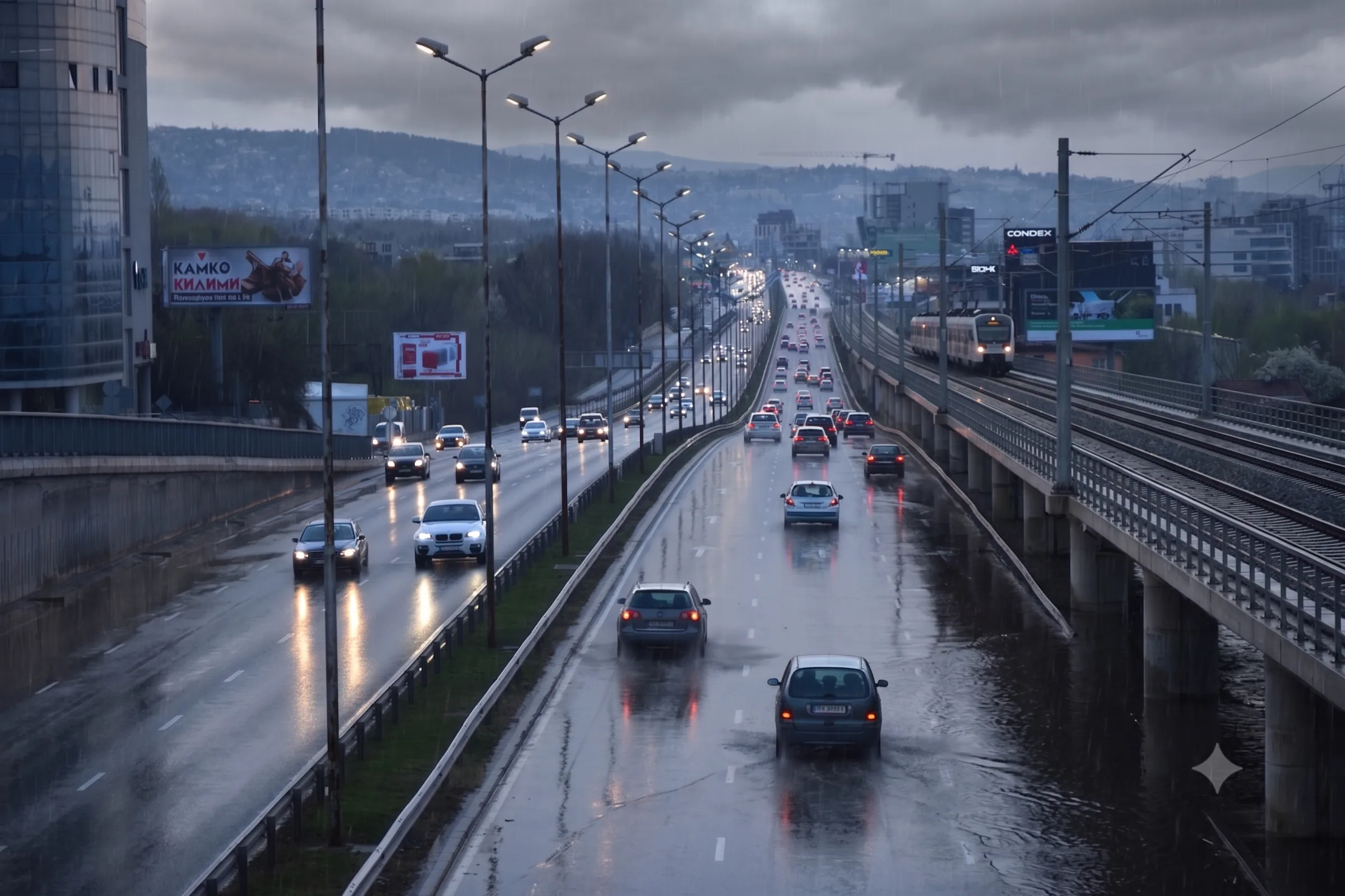
RAILWAYS · HIGHWAYS · INFRASTRUCTURE
Climate intelligence for railways and highways: the control center can't find out about the risk too late.
Anticipate landslides, fog, gusts and extreme rain before the stretch shuts down. Climate intelligence per slope, tunnel and kilometer.
+10,000 actionable alerts per year applied to real decisions
87% of landslides still catch highways and railways by surprise.







When the weather arrives before the decision, operations pay.
R$ 3 billion
in losses on highways and bridges in Rio Grande do Sul after the 2024 floods.
R$ 250k/h
in cost per hour stopped. 3 shutdowns in 4 months on railways in Brazil.
6 of 10
leading causes of accidents on federal highways stem from low visibility.
Landslides, fog, gusts, extreme rain. In every one of these cases, the event arrived before the decision.
Decide before the stretch shuts down.
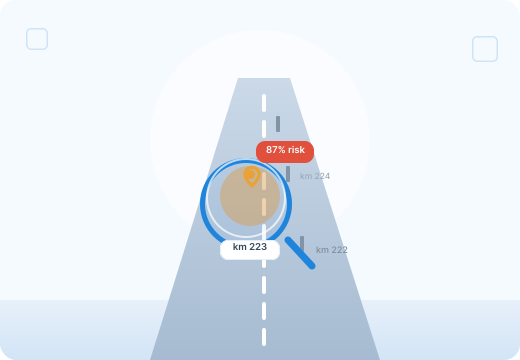
A view per kilometer, not per region
1 km to 3 km resolution, point by point. The control center doesn't get "rain in São Paulo". It gets "slope T-14 at km 223, 87% probability of closure in the next 6 h".
- Hyperlocal
- Per asset
- 1 km to 3 km resolution
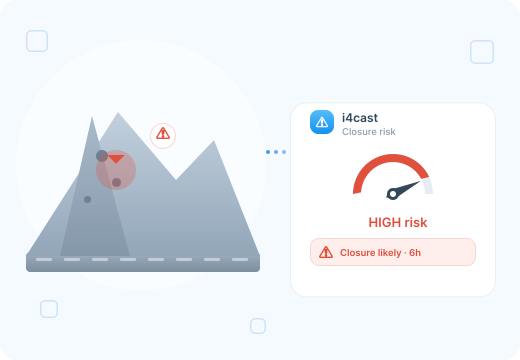
Closure risk, not a rain forecast
Every alert translates wind, rain, fog and landslide into the risk of halting the segment. The team receives the risk level, the likely window and the recommended action.
- Operational risk
- Safe windows
- Probabilistic
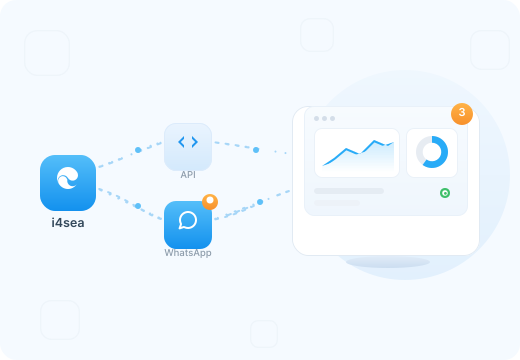
Straight into the control center, no interpretation along the way
Integration via API, WhatsApp, SMS, email and Teams. The person in charge doesn't get a generic message. They get an action to execute before the event.
- API
- Teams
- Manuals by alert level
The next stoppage costs more than anticipating it.
You can't control the weather, but you must manage the risks
Railway and highway operator
When the model doesn't see the risk, operations pay.
92%
of landslides anticipated, versus 13% before i4sea
Before i4sea, the sector's most reliable forecasting method saw only 13% of landslides. In practice, 87% of events caught operations by surprise, and the decision to close or reopen the stretch came after the slope had already given way. No climate model predicts 100% of a natural event, and you should be wary of anyone who promises that. What changes the game is the size of the blind spot: with i4sea's climate intelligence, operations went on to anticipate 22 of the 24 monitored landslides. Two cases remain without warning, against the 87% that used to be invisible. The question that matters isn't: is there still risk? It's: how much of that risk are you managing today?
Climate intelligence for railways and highways: frequently asked questions
The next stoppage costs more than anticipating it.
You can't control the weather, but you must manage the risks
It is the use of hyperlocal forecasting (1 to 3 km), stretch history and AI models to turn rain, wind, fog and landslide risk into operational decisions per asset: closure probability per slope, tunnel, bridge or kilometer, likely window and recommended action. Instead of "rain in the region", the control center receives which stretch is at risk, when the event is expected and what to do before it.
Each at-risk slope is registered as a monitored asset, with coordinates, geometry and history. The model combines accumulated rainfall, rainfall persistence and frequency, soil type, slope gradient, vegetation cover and operational triggers to generate dedicated alerts for that slope.
Yes. Each kilometer has its own rules and levels. You define what's critical, such as slope T-14, tunnel T-3 or the bridge over the Tietê, and receive individual alerts per asset, not per region.
It depends on the phenomenon:
- Severe storms / gusts: 1–6 h
- Accumulated rain / soil saturation: 24–72 h
- Cold fronts, heat waves, surges: 3–7 days
- Nowcasting (incoming rain): 15 min–2 h
Yes. We deliver alerts via REST API, WhatsApp, Teams, SMS and email. For legacy systems (SCADA, Maximo, ServiceNow), we configure custom webhooks during onboarding.
4 weeks, in 4 stages:
- Mapping of critical assets (km, slopes, bridges, tunnels)
- Calibration with the client's event history
- Configuration of alert levels, channels and recipients
- Training of the control center with protocol activation by alert level.
Yes. That's exactly where we add the most value. We don't depend on ground stations. We combine a numerical model, 10 years of proprietary reanalysis and AI models to generate an actionable risk matrix for any point.
We cross hyperlocal forecasting × the segment's history × the client's operational thresholds. The result is calibrated probability per asset: "T-14 has an 87% chance of closure in 6 h if accumulated rain exceeds 80 mm."
Heavy rain · landslides · wind and gusts · fog and low visibility · lightning · severe storms · hail · heat and cold waves · surge (on coastal segments).