INDUSTRY · CHEMICALS AND PETROCHEMICALS · STEEL · FOOD · CEMENT
Industrial production doesn't stop by chance. It stops for lightning, floods and extreme heat.
Lightning strikes, flooding, wind gusts, heat waves. Anticipate climate risks for each plant and operating area, protect people and assets and avoid unplanned shutdowns.
+10,000 actionable alerts per year applied to real decisions







Climate is the biggest unmanaged risk in industrial operations
63%
of the industries in Rio Grande do Sul, Brazil, hit by the May 2024 floods had a full or partial shutdown. In the survey, 81% of companies said they were affected, and 52% had no insurance against flood losses and damage.
Source: FIERGS, survey of 220 industries, June 2024.
22.85 million
occupational injuries a year worldwide are caused by excessive heat. The Americas saw the largest increase in these injuries since 2000, at 33.3%.
Source: ILO, 2024.
No. 1
is where Brazil ranks worldwide for lightning incidence. Industry is among the hardest-hit sectors, alongside power and telecommunications.
Source: Atmospheric Electricity Group (Elat), INPE.
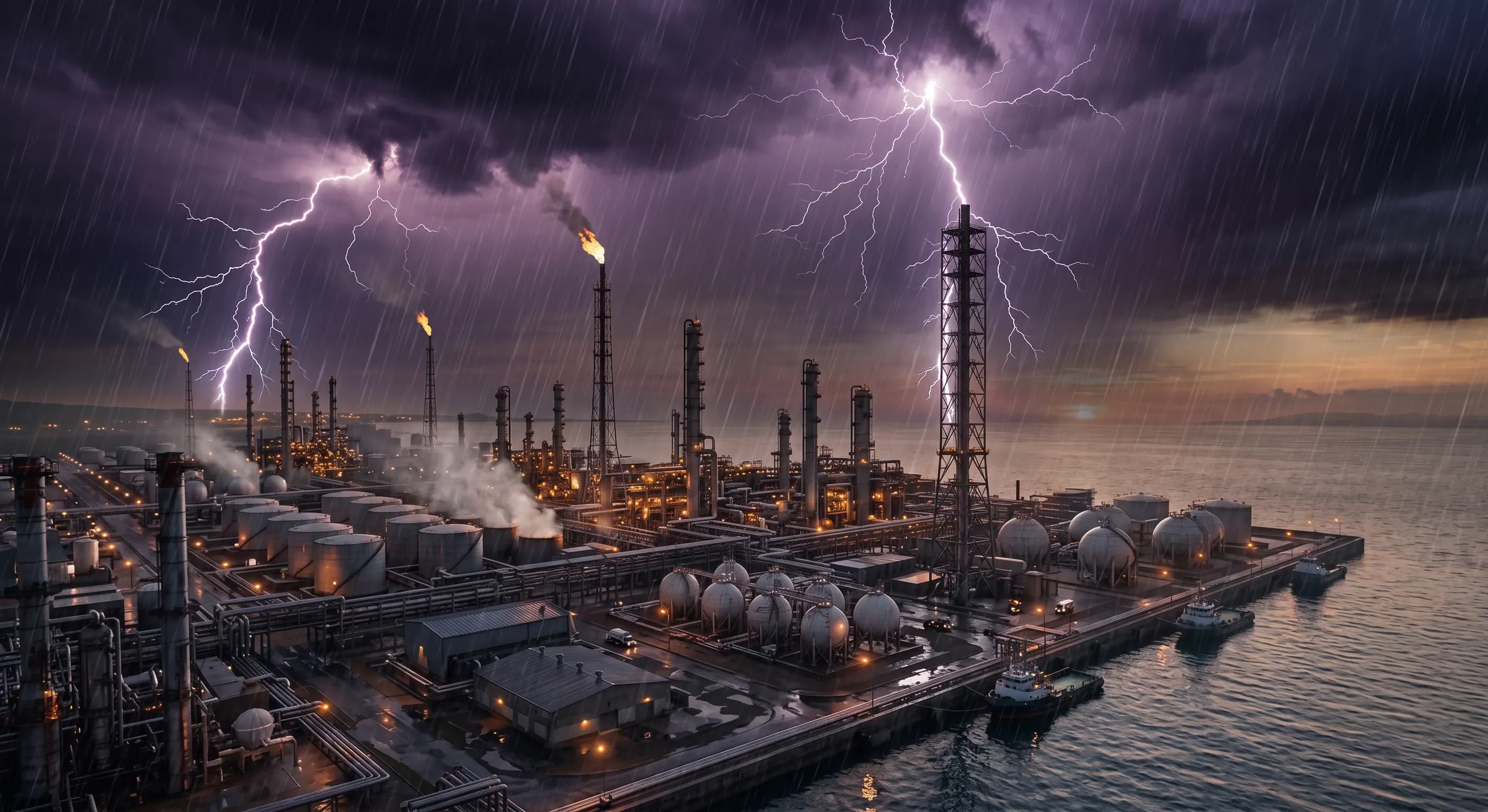
Lightning over the tank farm, flooding at the gate, a gust hitting the crane, heat on the production line. In every case, the event arrived before the decision.
The decision before the lightning, the flood and the heat wave
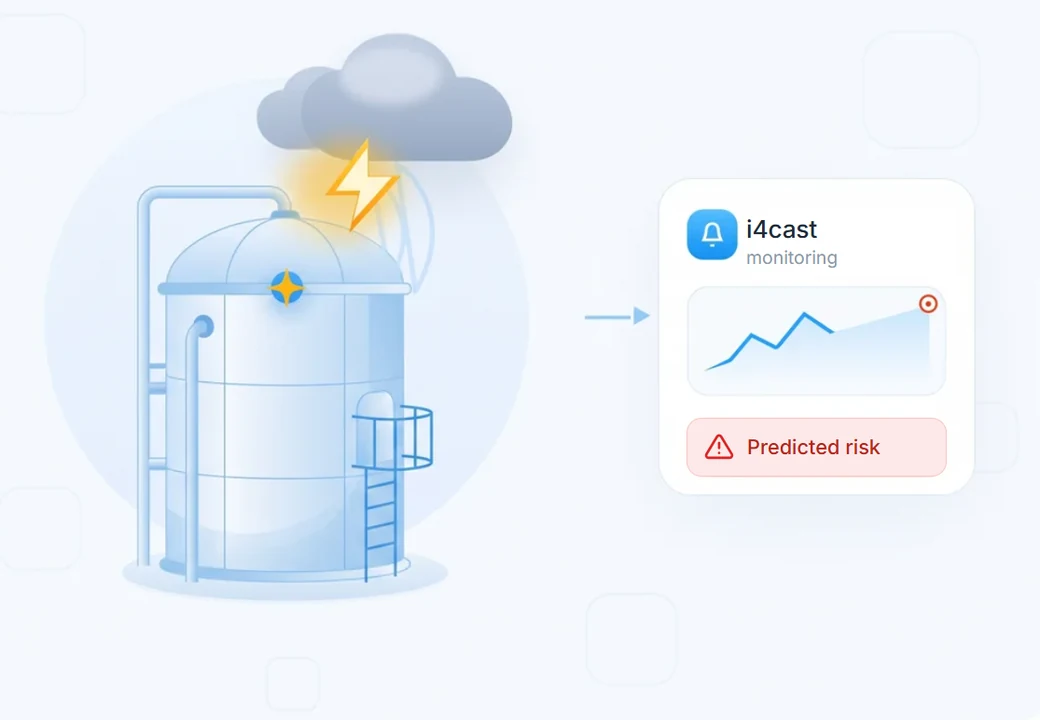
Climate risk anticipation by plant and operating area
Know in advance when lightning, heavy rain, flooding, wind gusts and extreme heat will hit each area of the plant. The forecast doesn't say "storm in the metro area". It says "Unit 2, tank farm, high risk of lightning between 2 pm and 5 pm, suspend loading and unloading of flammables".
- Lightning
- Flooding
- Wind gusts
- Extreme heat
- By operating area
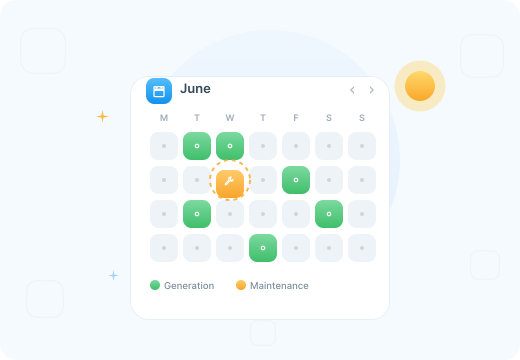
Shutdowns, shifts and maintenance planned more precisely
Every alert becomes an operational decision: when to release work at height and crane lifting, when to move inventory and raw materials ahead of a flood, when to reschedule a maintenance shutdown and when to adjust shifts and breaks on extreme heat days. The manager knows when to stop and when to keep production running.
- Fewer unplanned shutdowns
- Safe maintenance windows
- Protected inventory
- Shifts adjusted to heat
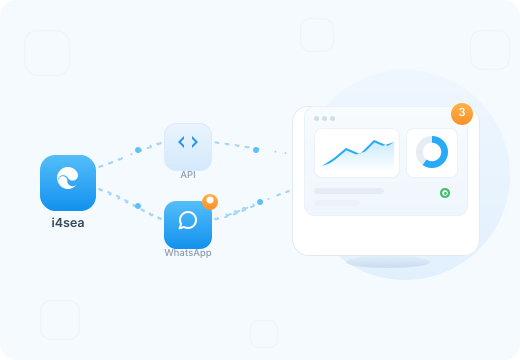
Workplace safety and intelligence integrated with the operations center
Integration runs via API, with easy connection to the leading ERPs on the market, plus WhatsApp, Teams, SMS and email. The operator doesn't get a weather bulletin. They get what to do: suspend, hold or mobilize the crew. Every alert and every action is recorded in an audit trail for insurers, audits and technical reports.
- API
- ERP integration
- Protocols by alert level
- Evidence trail
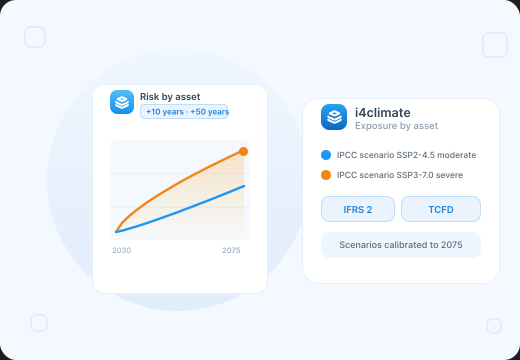
From today's alert to the physical risk report
i4climate combines terrain characteristics with rain, wind and heat to generate future risk maps for the region around each plant, across IPCC emissions scenarios and short- to long-term horizons. With each client, we add the exposure layer, which is the plant's assets. Together with the i4cast audit trail, these scenarios support physical risk reporting such as IFRS S2.
- i4climate
- Climate scenarios
- Future risk maps
- IFRS S2
- Audit trail
The next climate event costs more than monitoring it.
You can't control the weather, but you must manage the risks.
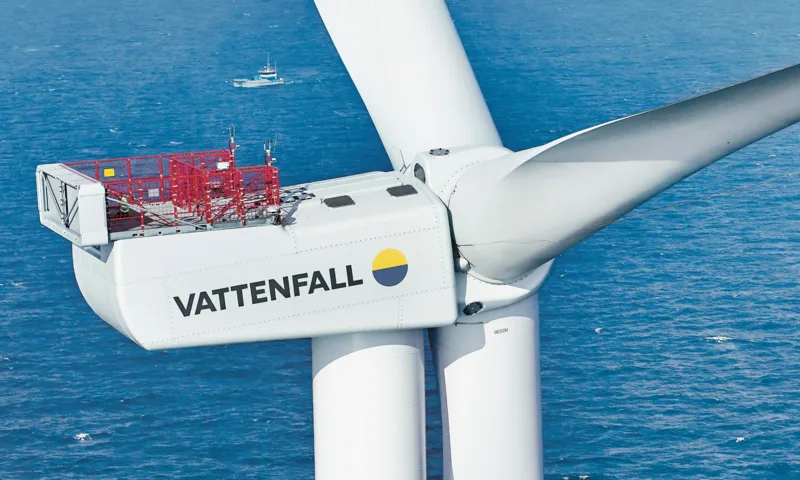

Vattenfall
The result when the decision comes before the event
27x
of proven ROI compared with the global forecasting model
Hyperlocal per-turbine forecasting generated 27.49 times more accumulated operational value than the global ECMWF model. In your operation: the same method that anticipates risk at each turbine, not across the whole wind farm, anticipates risk in each area of the plant, not across the whole region. Fine resolution and the asset's operational threshold, applied to production continuity, inventory protection and the safety of the people working at the plant.
See how this translates to your operation: request your free assessment →Questions we hear before every decision
The next climate event costs more than monitoring it.
You can't control the weather, but you must manage the risks
It is hyperlocal climate forecasting translated into operational decisions for industrial plants. It anticipates lightning, heavy rain, flooding, wind gusts and extreme heat by operating area. It also shows the impact on production continuity, inbound and outbound logistics, inventory protection and the safety of the people working at the plant.
Each plant and each critical area is registered as a monitored asset, with coordinates, characteristics and history. Examples of areas: tank farm, storage area, towers, work-at-height fronts, gate and logistics access points. The model combines the hyperlocal forecast with the plant's operational thresholds and generates area-specific alerts.
It depends on the phenomenon:
- Nowcasting (imminent lightning): 15 min to 2 h
- Lightning and wind gusts above the operational limit: 1 to 6 h
- Heavy rain and flooding: 2 to 12 h
- Cold fronts and prolonged rain systems: 3 to 10 days
- Heat waves: 5 to 10 days
Yes. Each area has its own rules and alert levels. You define what is critical, for example flammables storage tanks, an area prone to flooding or crane lifting, and receive individual alerts.
Yes. i4cast works via REST API, with easy integration with the leading ERPs on the market. Alerts also arrive via WhatsApp, Teams, SMS and email, and setup is done during onboarding.
3 weeks, in 3 stages:
- Mapping of critical areas (tank farm, storage, work-at-height fronts, logistics access points, substations)
- Calibration with the plant's history of events, shutdowns and operational thresholds
- Setup of alerts and channels, and training for the operations, maintenance and occupational health and safety teams
We use the available weather stations, lightning detectors and radars to correct numerical forecasts and generate more accurate AI forecasts, up to 48 hours ahead.
Lightning · heavy rain · flooding · wind gusts and windstorms · hail · extreme heat · cold fronts · reduced visibility · drought and water availability.
The cost of i4cast is a fraction of the loss from a single unplanned shutdown, adding up lost production, damaged inventory, stalled logistics, equipment repairs and sick leave. In the 2024 floods in Rio Grande do Sul, Brazil, 63% of the affected industries shut down fully or partially, and 52% had no insurance for those losses.
Yes. IFRS S2 requires disclosure of physical risks and climate scenario analysis. i4climate generates future risk maps for the region around each plant under different emissions scenarios and short- to long-term horizons, and builds the exposure layer of your operation's assets with you. i4cast records events and the actions taken in an audit trail, which backs disclosure with real operational data.
Four main differences:
- Resolution: more than 100 AI scenarios at 1 to 3 km resolution per plant area, instead of a generic regional forecast.
- Operational language: we deliver risk by area, safe window and recommended action, not a rain map. The operator gets an action, not raw data.
- Initiative: with traditional forecasts, the team checks when they remember. Here, the Agent alerts first, without anyone having to ask.
- Evidence: an audit trail per event for technical reports, insurance, compliance and physical risk reporting.
A bulletin reports the weather. The Agent protects production continuity.