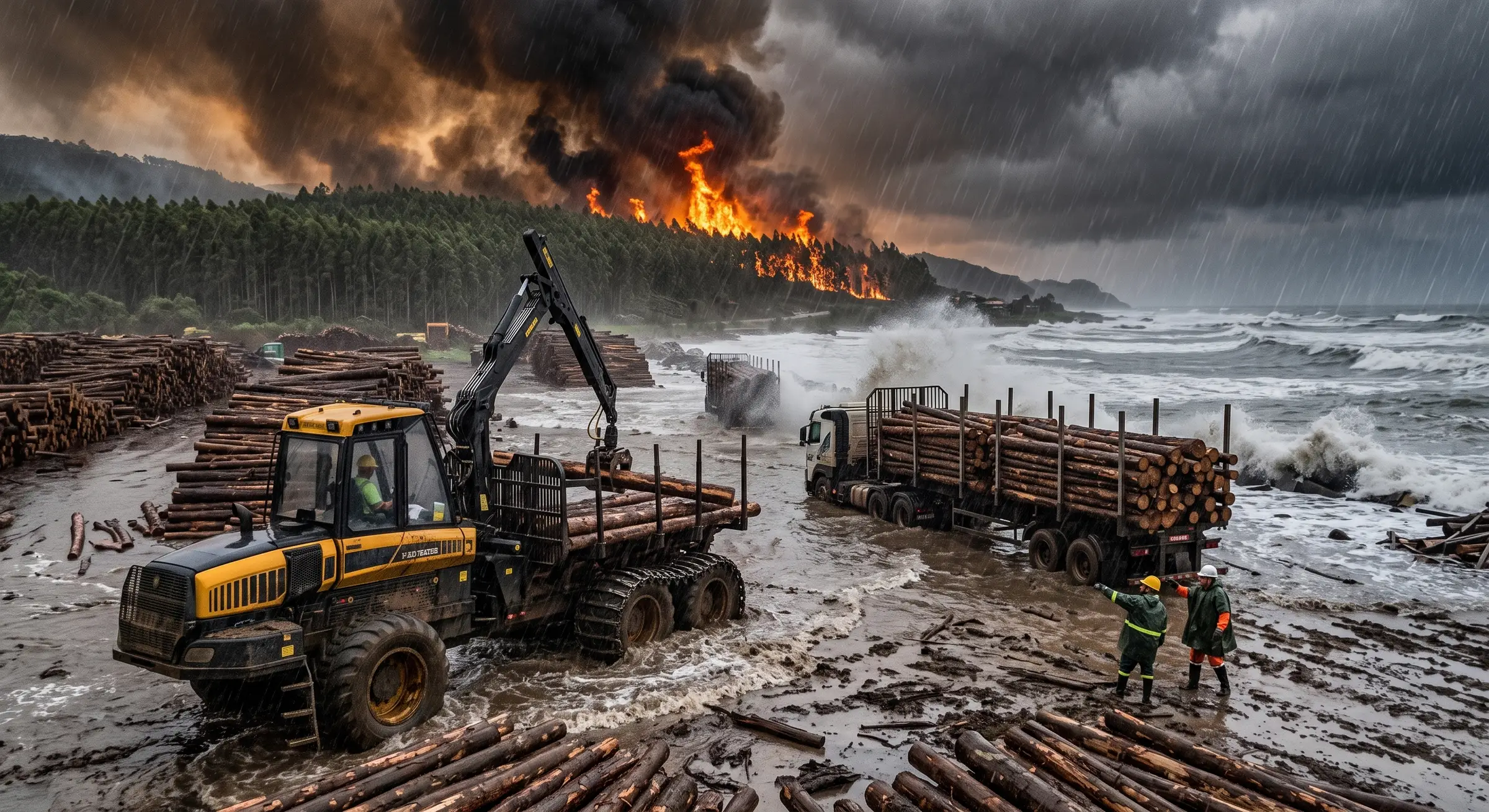
PULP AND PAPER · FOREST · MILL · PORT
Pulp production doesn't stop by chance. It stops for rain, fire and storms.
Rain on the forest road, fire in the stand, frost in the nursery, low water at the mill's intake. Anticipate climate risks, protect the forest base and keep the operation supplied from the stand to the ship.
+10,000 actionable alerts per year applied to real decisions


Weather is monitored across the pulp and paper chain, but climate risk exposure is not
Brazil exported 20.7 million tons of pulp in 2025, 11.6% more than in 2024. Every ton passed through a forest, a road, a mill and a port exposed to the weather.Source: Ibá.
R$ 6 million
was the estimated loss from a single fire that destroyed 220 hectares of eucalyptus in Mato Grosso do Sul. A burned forest does not become pulp.
Source: Correio do Estado.
12 days
of wood stacked in the yard is the reserve that a large pulp mill in Mato Grosso do Sul keeps so it doesn't depend on trucks on rainy days. Idle wood is idle capital.
Source: Campo Grande News.
About 6 hours
is how long the Port of Santos, the largest in Latin America, was closed by fog in September 2026. With the channel closed, no pulp ship comes in or goes out.
Source: CNN Brasil.
Rain on the road, fire in the stand, frost in the nursery, low water at the intake, fog in the port channel. In every case, the event arrived before the decision.
The decision before the rain, the fire and the frost
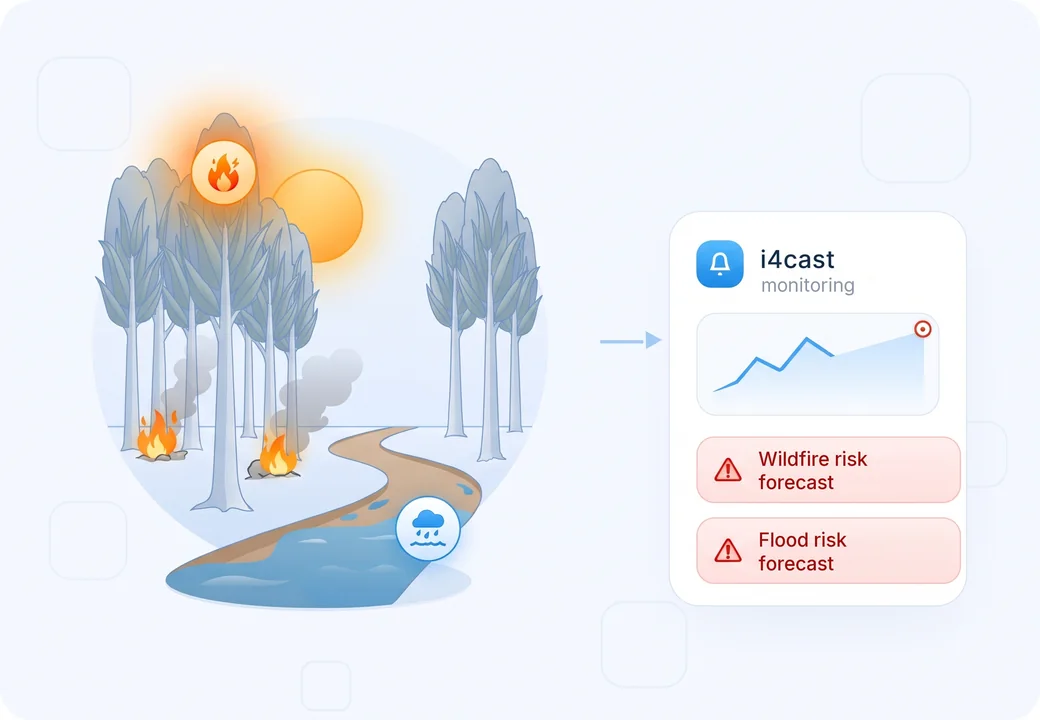
Risk anticipation by farm, stand and road
Know in advance when heavy rain, frost, lightning, wind gusts and high fire-risk days will hit each farm and each access road. It isn't "heavy rain in Mato Grosso do Sul". It's "Santa Rita farm, stand 112, 40 mm between 2 pm and 8 pm, access road above the rain limit until Thursday".
- Rain
- Frost
- Fire risk
- Lightning
- Wind gusts
- By stand

Harvesting, hauling and forestry at the right pace
Every alert turns rain, frost and fire risk into operational windows. The forest operations manager knows when to move the harvest module, which roads to prioritize, how much stock to keep in the yard, when to plant and apply, and when to position the fire crew.
- Less idle stock in the yard
- Fewer idle trucks
- Fire crew positioned before the fire
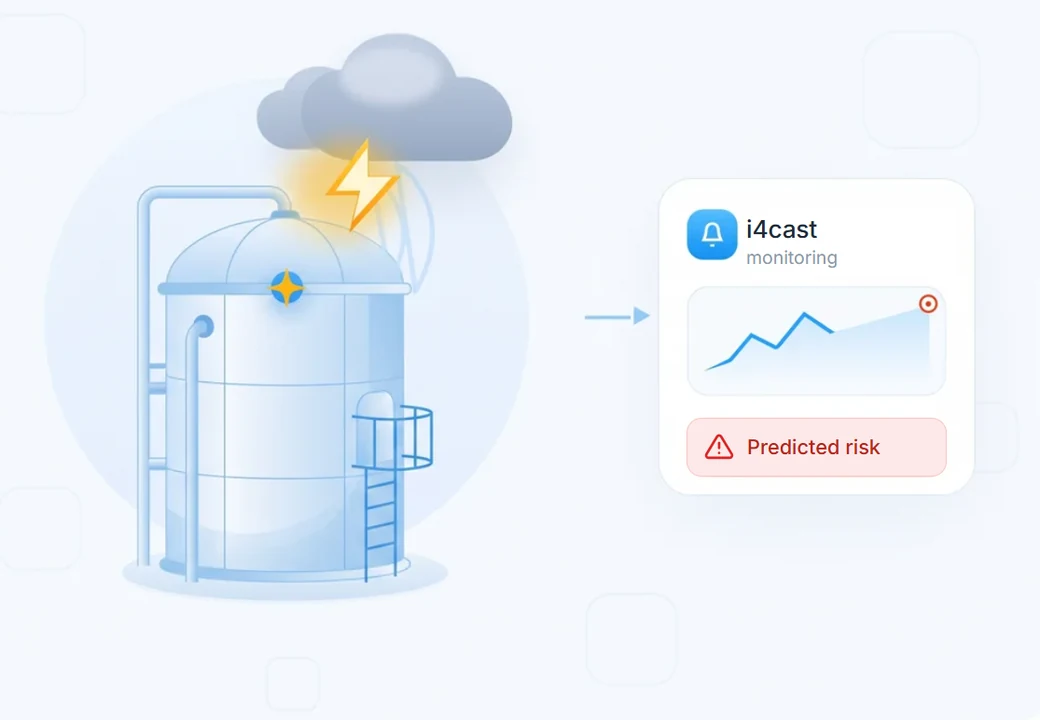
A mill supplied with wood and water
River flow forecasts for the intake, plus flood and lightning alerts for the plant and its substations. The mill knows in advance when the river will drop and when the storm will arrive.
- River flow
- Flooding
- Lightning
- Production continuity

Climate intelligence integrated with forest, mill and logistics operations
Integration via API, WhatsApp, Teams, SMS and email. The manager doesn't get a weather bulletin. They get whether to harvest, haul, mobilize the fire crew or reschedule the shipment.
- API
- Teams
- Protocols by alert level
The next climate event costs more than monitoring it.
You can't control the weather, but you must manage the risks.
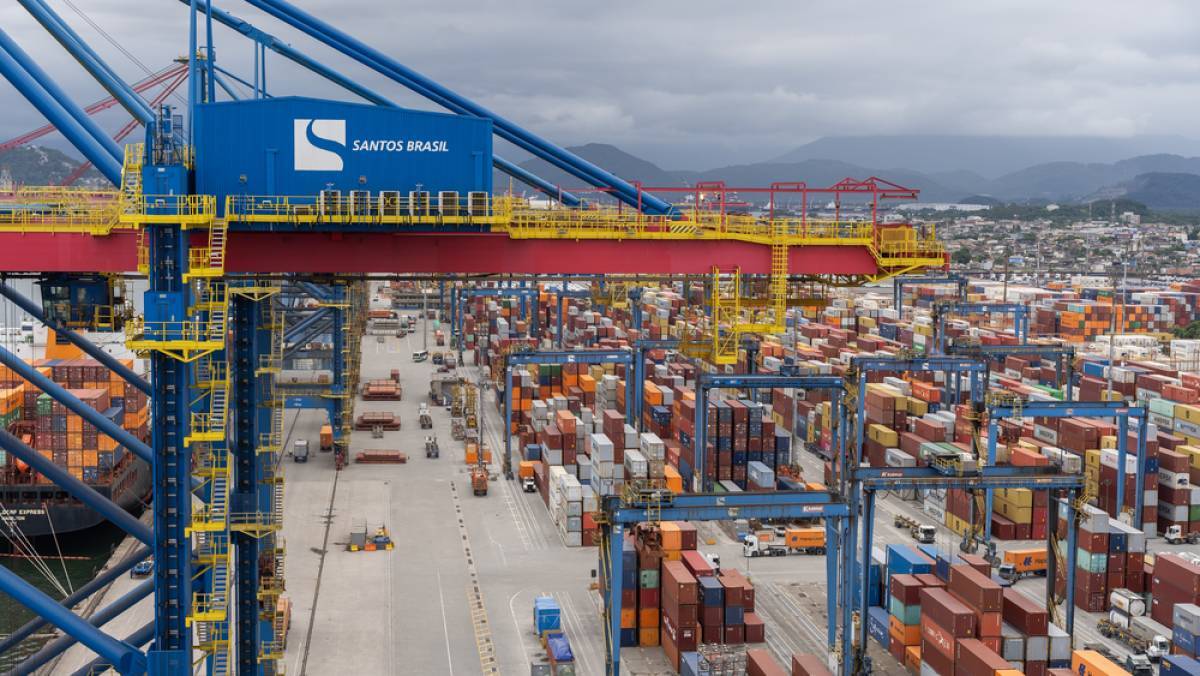
Santos Brasil
The result when the decision comes before the event
7 → 3 days
of vessel waiting time
By anticipating operating windows per berth, vessel waiting time at Tecon Santos, Brazil's largest container terminal, dropped from seven days to three.
Questions we hear before every decision
The next climate event costs more than monitoring it.
You can't control the weather, but you must manage the risks.
Each farm, stand, road section, yard, mill and terminal is registered as a monitored asset, with its own coordinates and operating thresholds. The model combines the hyperlocal forecast with those thresholds and generates asset-specific alerts.
It depends on the phenomenon:
- Lightning and heavy rain nowcasting: 15 min to 2 h
- Lightning and wind gusts: 1 to 6 h
- Heavy rain and storms: 6 to 120 h
- Cold fronts and frost: 3 to 10 days
- Swells and storm surges: 5 to 10 days
Yes. i4cast shows in advance the days and times when weather conditions favor the start and spread of fire on each farm. The fire crew is positioned before, not after.
Yes. The flow forecast shows in advance when the river level will approach the intake limit, so the mill can adjust operations before the restriction.
Yes. Each asset has its own rules and levels. You define what is critical (a stand in harvest phase, a road without gravel, a nursery, an intake point) and receive individual alerts.
Yes. We deliver via REST API, WhatsApp, Teams, SMS and email. For forest planning systems, the mill's supervisory system and the logistics control tower, we configure webhooks during onboarding.
3 weeks, in 3 steps:
- Mapping of critical assets (farms, roads, yards, mill, intake, terminal)
- Calibration with the history of weather-related stoppages and operating thresholds
- Configuration of alerts and channels, and team training
Yes. We use the stations on the farms, at the mill and at the terminal to correct numerical forecasts and generate AI forecasts up to 48 hours ahead.
Heavy and accumulated rain · frost · fire risk · lightning · wind gusts and storms · hail · heat waves · flooding · river flow · fog and reduced visibility · swells and storm surges.
The cost of i4cast is a fraction of the loss from a single event. A fire across 220 hectares of eucalyptus caused an estimated loss of R$ 6 million in Mato Grosso do Sul. Monitoring pays for itself with the first event anticipated.
Three main differences:
- 100+ AI scenarios at 1 km to 3 km resolution per stand, road and mill, not a generic regional forecast.
- We enter the process and the language of the operation: we deliver stoppage probability and harvest, hauling and shipping windows, not a rain map. The manager gets action, not raw data.
- Evidence: an audit trail per event for technical reports, insurance and compliance.
Traditional providers deliver a bulletin; we deliver operational climate intelligence.